Fuel economy calculator
Calculate your MPG or L/100 km.
Enter the distance you drove and the fuel you used. The calculator does the math in both US and metric units, instantly.
Formulas used: MPG = miles ÷ gallons. L/100 km = (liters ÷ km) × 100. Conversion: 1 US MPG ≈ 235.215 ÷ (L/100 km).
What is fuel economy?
Fuel economy measures how far a vehicle travels on a given amount of fuel. In the United States it's expressed as miles per gallon (MPG) — higher is better. Most of the rest of the world uses liters per 100 kilometers (L/100 km) — lower is better. They're the same idea, inverted.
The two units don't convert with a simple multiplier. A car that gets 30 MPG burns roughly 7.84 L per 100 km. A 6 L/100 km car gets about 39 MPG. Use the calculator above to switch between them.
How to measure your real-world fuel economy
Window-sticker MPG numbers come from a controlled lab cycle. Your real fuel economy depends on how, where, and what you drive. To get an honest number, use the fill-to-fill method:
- Fill the tank completely. Note the odometer reading (call this start).
- Drive normally until you need to fill up again.
- Fill the tank completely. Note the odometer reading (end) and the gallons or liters added.
- Distance = end − start. Plug that and the fuel into the calculator above.
One full-to-full reading isn't statistically meaningful — temperature, traffic, and pump cutoff all add noise. Average at least five fill-ups and you'll have a number close to your true long-term economy.
What's a "good" MPG?
For modern gasoline vehicles in 2026, rough benchmarks:
- Compact / hybrid sedan — 40–55 MPG (4.3–5.9 L/100 km)
- Mid-size sedan or crossover — 28–35 MPG (6.7–8.4 L/100 km)
- Full-size SUV or pickup — 17–22 MPG (10.7–13.8 L/100 km)
- Plug-in hybrid (charged) — 80–110 MPGe
If your number is significantly worse than the bracket for your vehicle, the usual culprits are short trips, aggressive driving, under-inflated tires, a dirty air filter, or a check-engine condition you've been ignoring.
Track fuel economy automatically with Maintory
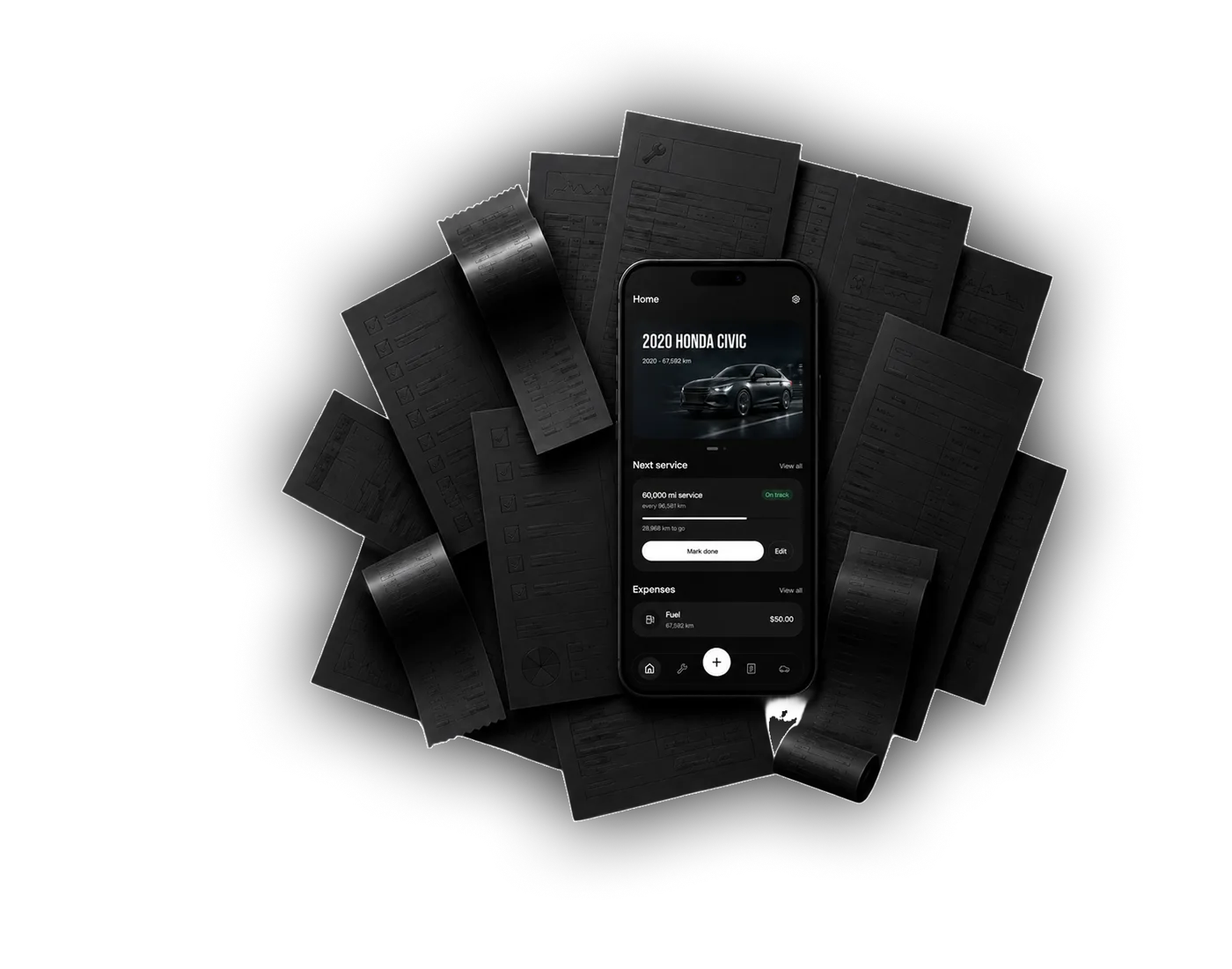
Doing this math after every fill-up gets old fast. Maintory does it for you: tag a fuel entry as a full tank, and the app computes the MPG (or L/100 km) between successive full fills automatically. You get a clean chart of your real-world fuel economy over weeks and months — alongside the rest of your car's expenses and service history.
Related guides & calculators
One calculation, a year of insight.
Maintory logs every fill and tracks economy over time — so you spot drops, not just averages.
Download on theApp Store